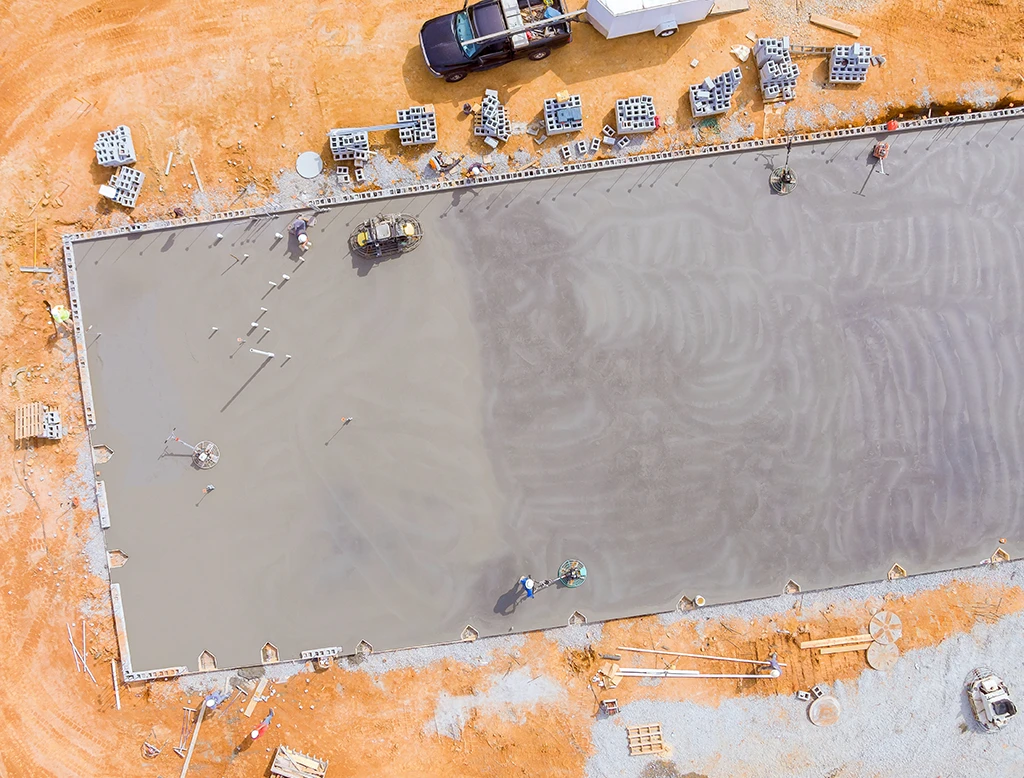
A metal building is only as good as the foundation beneath it. The concrete slab supports the entire structure, anchors the frame, and helps prevent shifting, cracking, and moisture issues over time.
If the slab is poorly designed or installed, problems show up fast. Doors stop aligning, walls stress, and water intrusion becomes a constant issue. Getting the slab right from the start protects your investment and keeps your building performing as intended.
This guide breaks down everything you need to know about a concrete slab for metal building projects. It reflects what top-ranking pages cover, but goes deeper into real-world decisions, costs, and construction details that matter.
Metal buildings rely on precise engineering. The slab must match that level of precision. A properly installed slab does more than hold weight. It distributes loads evenly, resists ground movement, and provides a level surface for construction. It also plays a role in moisture control and long-term durability. When the slab is designed with the building system in mind, installation becomes smoother and structural performance improves. That connection between foundation and structure is where many projects succeed or fail.
Not every project uses the same type of slab. The right choice depends on soil conditions, building size, and intended use.
A monolithic slab is poured all at once, including the footing. This is one of the most common options for metal buildings. It works well for smaller structures and stable soil conditions. Because everything is poured in a single step, it can reduce labor time and cost.
A floating slab sits directly on the ground without deep footings. It is designed to move slightly with soil shifts without cracking. This type is often used for garages, workshops, and agricultural buildings. Proper site preparation is critical to avoid settling issues.
This option includes deeper footings around the edges for added support. It is commonly used for larger or heavier buildings. Perimeter footings help distribute loads and improve stability, especially in areas with freeze-thaw cycles or weaker soil.
The best slab design depends on more than just thickness. Several factors influence performance and longevity.
The ground beneath the slab must be stable and well-compacted. Poor soil preparation leads to uneven settling and cracking. A base layer of gravel is typically added to improve drainage and create a stable surface.
Most metal building slabs range from 4 to 6 inches thick. Heavier applications may require thicker slabs or reinforced sections. The exact thickness should match the building load and usage. For example, a workshop with heavy equipment needs more support than a simple storage structure.
Reinforcement adds strength and reduces cracking. This is typically done using rebar or wire mesh. Rebar provides stronger support and is often recommended for larger or high-load buildings.
Anchor bolts connect the metal building frame to the slab. Their placement must be precise. Incorrect alignment can delay construction or require costly fixes. This is why coordination between the slab contractor and building provider is essential.
A vapor barrier under the slab helps prevent moisture from rising through the concrete. This is especially important for enclosed buildings or spaces with climate control.
Understanding the process helps you plan and avoid surprises during construction.
Each step affects the final quality of the slab. Skipping details or rushing the process can lead to long-term problems.
Costs vary depending on size, location, and complexity. On average, a concrete slab for metal building projects ranges from $5 to $10 per square foot.
Several factors influence the final price:
While it may be tempting to cut costs, the slab is not the place to compromise. A well-built foundation reduces maintenance and repair expenses over time.
Many slab issues come from preventable mistakes. Poor site preparation is one of the most common problems. If the soil is not properly compacted, the slab can settle unevenly. Incorrect anchor bolt placement is another issue. Even small misalignments can create major challenges during building installation. Skipping a vapor barrier can lead to moisture problems inside the building. Over time, this can damage flooring, equipment, and stored materials. Using the wrong thickness or insufficient reinforcement also increases the risk of cracking and structural issues.
Bluebird Building Systems approaches every project as a complete system, not just a standalone structure. Their team works closely with clients to ensure the concrete slab is designed to match the building specifications. This coordination helps avoid alignment issues and ensures proper load distribution. By integrating foundation planning with building design, Bluebird helps reduce delays, improve durability, and deliver a smoother construction process. This level of planning is what separates a standard build from a high-performing structure that lasts for decades.
For homes or living spaces, comfort and moisture control are key. Slabs often include vapor barriers and insulation to improve energy efficiency.
These projects require stronger slabs with higher load capacity. Reinforcement and precise engineering are critical.
Durability and drainage are the focus. Slabs must handle equipment, livestock, and exposure to moisture.
A well-built concrete slab requires minimal maintenance, but it is still important to monitor its condition. Check for cracks, uneven areas, or signs of moisture intrusion. Addressing small issues early prevents larger problems later. Sealing the concrete surface can also help extend its lifespan and improve resistance to wear.
The success of your slab depends on both design and execution. Working with experienced professionals ensures the foundation meets structural requirements and aligns with your building system. Bluebird Building Systems brings expertise in both areas. Their integrated approach helps ensure your slab and metal building work together from day one.
A strong foundation sets the stage for everything that follows. If you are planning a metal building, Bluebird Building Systems can help you get it right from the ground up. A properly designed concrete slab is the foundation of a successful metal building project. When you align the slab with the structure and work with an experienced provider like Bluebird Building Systems, you set the project up for long-term performance and reliability.
Most slabs are 4 to 6 inches thick. Heavier buildings or equipment may require thicker slabs or reinforced areas. The exact thickness depends on load requirements and local conditions.
Many metal buildings use slabs with perimeter footings for added support. Smaller structures may use monolithic slabs. The choice depends on soil conditions and building size.
Concrete typically takes about 28 days to fully cure. Light construction can often begin sooner, but full strength develops over time.
Yes, but the slab must meet structural and design requirements. Anchor bolt placement and load capacity must align with the building specifications.
A vapor barrier is strongly recommended, especially for enclosed buildings. It helps prevent moisture from entering and protects the interior environment.
Costs generally range from $5 to $10 per square foot. Final pricing depends on size, thickness, reinforcement, and site preparation.