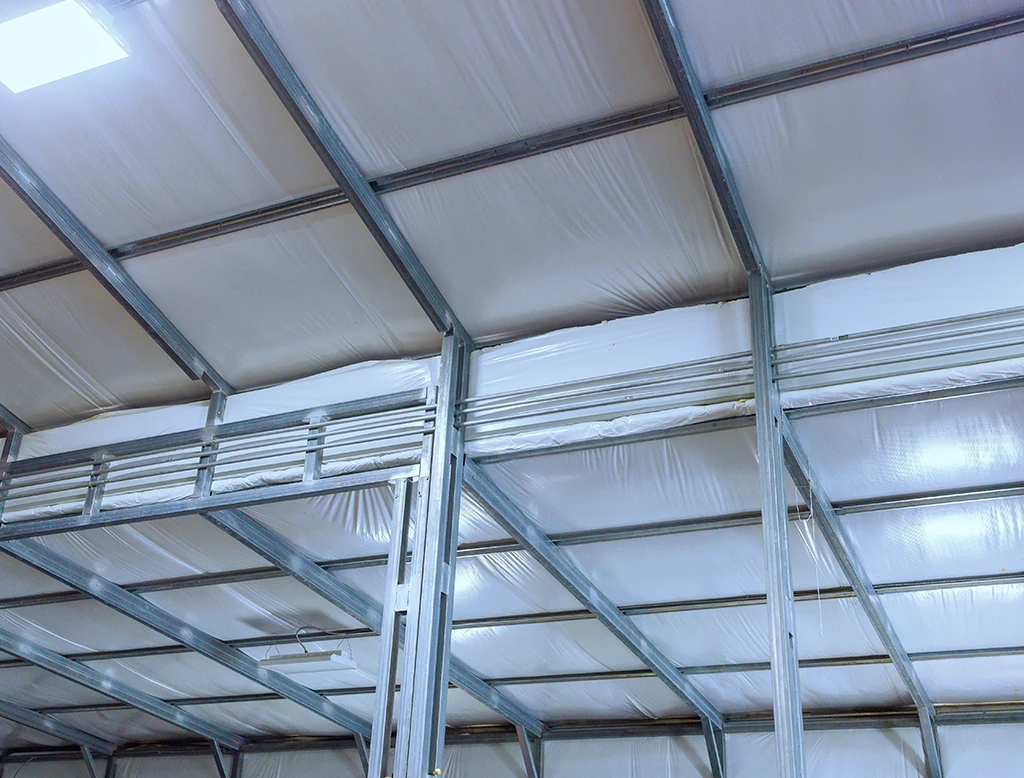
Metal buildings provide strength, durability, and cost efficiency, but they can become uncomfortable without proper insulation. Steel transfers heat quickly, which means an uninsulated structure can feel extremely hot during summer and very cold during winter. Many building owners search for the cheapest way to insulate a metal building so they can improve comfort and reduce energy costs without increasing their construction budget.
Insulation also helps control condensation inside metal structures. Moisture can form when warm interior air meets cooler steel panels. Over time this condensation can damage equipment, tools, and stored materials. Installing the right insulation system protects the building while improving temperature control and energy efficiency.
The most affordable insulation method depends on the building’s purpose, climate conditions, and installation approach. Some materials offer the lowest upfront cost, while others deliver stronger performance and long term savings. Understanding the most common options makes it easier to choose the right insulation for your metal building.
Fiberglass insulation is widely considered the cheapest way to insulate a metal building. This material has been used in construction for decades because it is inexpensive, accessible, and effective when installed correctly.
Fiberglass insulation consists of fine glass fibers that trap pockets of air. These air pockets slow the movement of heat through walls and ceilings. In metal buildings, fiberglass batts are typically installed between framing members and covered with a vapor barrier to reduce moisture buildup.
Material costs for fiberglass insulation often range between about $0.40 and $0.75 per square foot depending on thickness and R value. Because it is lightweight and easy to cut, many building owners choose fiberglass for do it yourself installation, which can further reduce labor costs.
Fiberglass insulation works best when installed carefully with proper sealing and vapor barriers. Without these precautions, air gaps or moisture can reduce insulation performance.
Several insulation materials provide cost effective solutions for metal structures. Each option offers different advantages depending on the building’s use and climate conditions.
Fiberglass batt insulation remains the most common budget friendly insulation system for metal buildings. It is widely available at most building supply stores and works well in workshops, garages, and storage buildings.
Fiberglass is easy to install between wall framing and ceiling systems. Many builders choose it because it offers reliable thermal performance at a low cost. When combined with a vapor barrier, fiberglass insulation can help reduce condensation inside the building.
This option works best in buildings that do not require extremely tight air sealing or high energy efficiency standards.
Reflective foil insulation works differently from traditional insulation materials. Instead of trapping heat, it reflects radiant heat away from the building.
This insulation often consists of aluminum foil bonded to foam or bubble layers. It is commonly installed beneath roof panels or inside wall systems to reduce heat gain from sunlight.
Reflective insulation can be especially effective in warm climates where solar heat creates high interior temperatures. Because the material is thin and lightweight, it often costs less than thicker insulation systems and installs quickly during construction.
Rigid foam board insulation offers a balance between affordability and performance. These panels are made from materials such as polystyrene or polyisocyanurate and provide higher R values than fiberglass.
Foam board panels are typically installed against walls or beneath roof systems to reduce heat transfer through the building envelope. This material also resists moisture better than fiberglass, which helps control condensation in some environments.
Although foam board costs more than fiberglass insulation, it remains less expensive than advanced insulation systems such as spray foam.
Some insulation systems require higher upfront investment but deliver stronger performance and long term energy savings. These options may be worth considering for buildings that require climate control or year round use.
Spray foam insulation expands after application and fills gaps between panels and framing members. This creates a continuous air seal that prevents heat loss and reduces condensation.
Closed cell spray foam provides one of the highest R values available in building insulation. It also strengthens the building envelope and blocks air infiltration. These benefits make spray foam one of the most effective insulation systems for metal structures.
However, spray foam usually costs more than other materials and requires professional installation. Many building owners choose it when energy efficiency and moisture control are top priorities.
Some buildings benefit from combining multiple insulation materials. Hybrid insulation systems can balance cost and performance while improving temperature control.
For example, fiberglass insulation may be installed within wall cavities while reflective foil insulation is added beneath the roof panels. This combination helps reduce heat transfer from multiple directions while keeping material costs manageable.
Hybrid systems allow builders to tailor insulation performance to the building’s climate and use without relying on a single high cost material.
Several factors influence the total cost of insulating a metal structure. Material selection is only one part of the equation.
Building size is a major factor because larger structures require more insulation material and labor. The thickness of insulation also affects cost since higher R values require additional layers or denser materials.
Climate conditions also play an important role. Buildings located in colder regions often require higher R values to maintain interior temperatures. In warmer climates, reflective insulation may reduce heat gain more effectively than thicker materials.
Installation methods can also influence total cost. Do it yourself installation with fiberglass or reflective foil reduces labor expenses, while spray foam systems usually require trained installers and specialized equipment.
Reducing insulation costs begins with choosing the right materials and installation strategy. Many building owners focus on practical approaches that deliver adequate insulation performance without excessive spending.
Budget friendly insulation strategies may include:
These improvements can significantly enhance comfort and temperature control while keeping insulation costs low.
The cheapest insulation option is not always the best long-term solution. A storage building used occasionally may function well with fiberglass insulation, whereas a workshop or commercial facility may require higher-performance insulation to maintain comfortable working conditions.
Climate control requirements, building usage, and moisture conditions should all be considered when selecting insulation materials. Proper planning ensures the insulation system supports both performance and cost efficiency.
Working with experienced metal building professionals can help identify insulation strategies that match the building design and intended use.
Insulation plays an important role in the overall performance of a metal building. Choosing the right system during the design stage can improve comfort, reduce condensation, and support long term energy efficiency.
Bluebird Building Systems works with clients to design pre engineered metal buildings that accommodate effective insulation solutions. Our team helps evaluate building layout, structural design, and insulation options so your building performs well in any climate.
Get expert guidance and accurate planning support for your next project.
Fiberglass batt insulation is usually the cheapest way to insulate a metal building. It has a low material cost and can often be installed without specialized equipment.
Fiberglass insulation works well when installed correctly with vapor barriers and proper sealing. It helps control temperature while reducing condensation risks.
Spray foam insulation costs more upfront but provides superior air sealing and higher insulation performance. Many building owners choose it for climate controlled spaces.
Yes. Many insulation materials such as fiberglass batts and reflective foil insulation are suitable for do it yourself installation, which helps reduce labor costs.
Proper insulation combined with vapor barriers and ventilation helps reduce condensation by limiting the temperature difference between interior air and metal panels.
Recommended R values depend on climate and building use. Cold climates often require higher R values for walls and roofs, while warmer climates may rely more on reflective insulation to control heat gain.